

























































 ΔΕΙΤΕ ΠΡΩΤΟΙ ΟΛΑ ΤΑ ΝΕΑ ΤΟΥ TRIBUNE ΣΤΟ GOOGLE NEWS
The Greek Parliament in 1998 unanimously voted to establish September 14 as a “national day of remembrance for the Genocide of the Greeks of Asia Minor and Eastern Thrace by the Turkish State.”
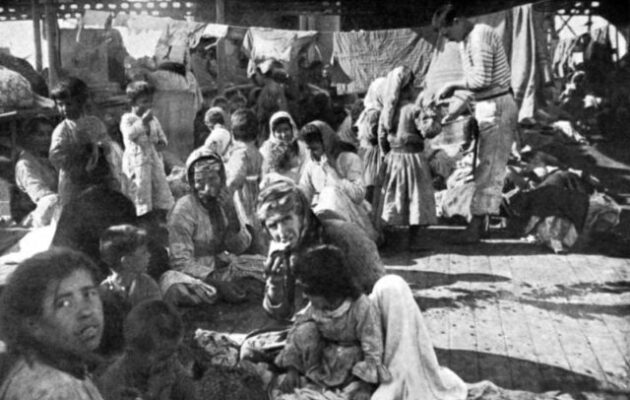
The Genocide of the Greeks in Asia Minor and Eastern Thrace is defined as the deliberate and systematic extermination of Greek populations in those regions by the mechanisms of the Ottoman government, led by the nationalist Young Turks, and the Turkish nationalist movement of Mustafa Kemal.
This campaign, which lasted until 1923, began with the Economio Massacre on January 25, 1913. The areas most affected were Ionia, Cappadocia, Pontus, and Bithynia.
This genocide occurred in parallel with similar genocidal campaigns against other Christian populations within the Ottoman Empire, namely the Armenians and the Assyrians.
Estimates for the human toll between 1912 and 1922 vary widely, from 200,000-300,000 up to 800,000-1,200,000, according to some Greek scholars.
A contributing factor to the genocide of the Greeks was an economic one.
A significant portion of commerce and industry was in the hands of the Greek population, which was a barrier to German ambitions for economic penetration into the underdeveloped Ottoman Empire.
In 1915, propaganda leaflets from the German Palestine Bank encouraged Turks to sever all economic ties with Greeks and Armenians.
German military advisors reportedly suggested the deportation of Greek populations from Eastern Thrace and Asia Minor during World War I.
This was presented as a systematic way to transfer thousands of Greeks for “military reasons,” but its practical application was a means of their physical extermination. The pretext for expelling Greek residents was the security of the Ottoman Empire’s borders with Greece, a move supported by the Germans.
This took place despite the fact that the Greek state was officially neutral in World War I, and its King, Constantine, was pro-German. Nevertheless, all Greek communities were considered suspect by Turkish authorities.
An Ottoman government decree, dated May 14, 1914, was leaked to the European press. It gave instructions for the deportation of the Greek population and required the displaced to sign certificates stating they had left their homes willingly. The methods used for these deportations seem to have been inspired by German advisors. By late 1913, German General Liman von Sanders had already taken over the military command of Turkey. He deemed the removal of Greek populations from the areas bordering Greece, specifically the western Asia Minor coast, to be an urgent necessity.






 Για έγκυρη ενημέρωση πατήστε follow και ακολουθήστε μας στο twitter