

























































 ΔΕΙΤΕ ΠΡΩΤΟΙ ΟΛΑ ΤΑ ΝΕΑ ΤΟΥ TRIBUNE ΣΤΟ GOOGLE NEWS
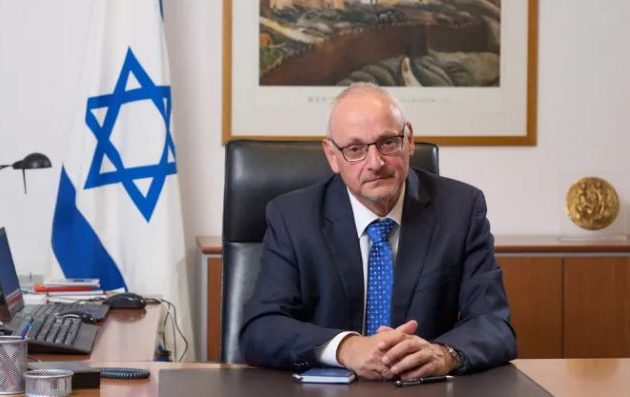
In an interview with TA NEA Weekend, Israel’s Ambassador to Greece, Noam Katz, condemned recent statements from Turkey as “appalling” and dangerously inflammatory, warning that such rhetoric only adds fuel to the fire in an already volatile region. He expressed hope that Ankara will alter its course and take on a more constructive role.
Ambassador Katz addressed the upcoming Greece–Cyprus–Israel Trilateral Summit, the future of the GSI electricity interconnection, and Turkey’s broader posture in the region.
Regarding the Trilateral, he emphasized that the framework reflects a strong and vital understanding among the three countries that cooperation serves their shared interests and common vision. “It creates a pillar of stability in turbulent times,” he said, noting that the upcoming summit will not only serve as a venue to discuss global and regional developments but will also facilitate joint initiatives across sectors—ranging from energy and environment to trade and security. While he refrained from naming a date, he indicated that the summit is expected soon.
Asked about the security guarantees the Greece–Cyprus–Israel partnership can offer in the Eastern Mediterranean, especially with U.S. involvement, Katz underlined the clear vision of the Trilateral: to promote security and prosperity in the region. He noted that all three partners are committed to building a consistent, sustainable collaboration that benefits both them and other regional actors. U.S. support, he added, significantly strengthens this partnership and ties it to the broader IMEC corridor initiative.
On the subject of the GSI electricity project, Katz said he would not go into specific timelines, but stressed that Israel remains firmly committed to the interconnection. “It can and must be implemented,” he said, calling it an essential part of Israel’s energy diversification strategy.
As Israel functions as an “energy island,” he explained, projects like GSI are critical for its long-term energy security. He referred to a recent meeting between Prime Minister Netanyahu and Cypriot President Nikos Christodoulides, during which Netanyahu reaffirmed support for the project. “An agreement for the power cable is expected to be signed this year,” Katz noted.
Reflecting on Greek–Israeli relations, the ambassador described them as a strong strategic friendship rooted in shared values and interests. Cooperation spans a broad range of fields—including defense, energy, commerce, and culture—while recent high-level visits, such as that of Prime Minister Mitsotakis to Israel, reflect the depth of the bilateral relationship.
He highlighted increasing business and interpersonal ties, alongside efforts to deepen institutional links and mutual awareness. “We’re working hard to expand cooperation, from academic exchanges and tech partnerships to joint business missions,” he said. Trade and tourism are both growing steadily, with bilateral trade now reaching €1.4 billion and plenty of room for further growth.
Regarding Turkey’s recent rhetoric against Israel and the internal developments following the arrest of Constantinople’s mayor, Ekrem İmamoğlu, Katz expressed serious concern. “Such statements from Turkey are not just appalling—they are destabilizing,” he stressed, noting Ankara’s support for Hamas and other Sunni extremist groups as a key destabilizing factor in the region.
He also voiced concern about the evolving situation in Syria, particularly the need to protect minorities such as the Alawites and Druze, citing recent massacres and ongoing attacks. “Israel remains alert to defend its citizens,” he added.
Asked about the continuing war in Gaza, Katz was unequivocal: “We are still at war with Hamas. This war will not end until all 59 hostages are home, and until Hamas’ military and governing capabilities are dismantled.”
He insisted that this is a non-negotiable condition for future stability.
Hamas, he stressed, is only one of Iran’s many proxies. “Iran remains the primary orchestrator of instability in our region,” he said, warning that Tehran’s pursuit of military nuclear capabilities poses a direct threat to global peace and security.






 Για έγκυρη ενημέρωση πατήστε follow και ακολουθήστε μας στο twitter