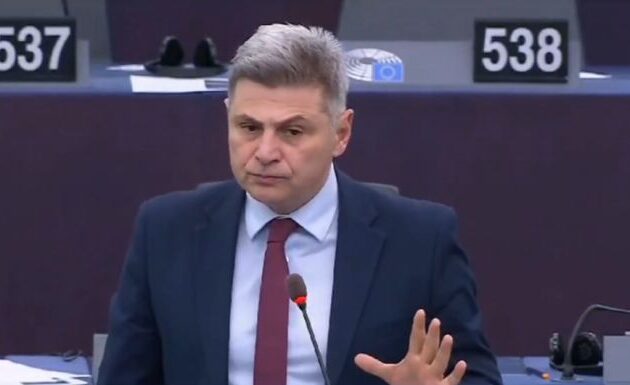
A sharp verbal confrontation took place in the European Parliament between Greek MEP Nikolas Farantouris and the European Union’s High Representative for Foreign Affairs, Kaja Kallas, centering on the urgent need to protect Christian populations in Syria following the rapid political and military shifts in the country.
In an intervention addressed to the chief of European diplomacy, Mr. Farantouris underscored the critical nature of the moment for religious minorities in the Middle East and called on the European Union to immediately assume a leading and tangible role.
Farantouris’ Intervention
“Europe cannot remain a mere bystander in the face of the threat of a new humanitarian tragedy and the cultural depletion of the region,” the Greek MEP emphasized.
“Christian communities in Syria, which have been an integral part of the Middle East’s history and identity for two thousand years, currently find themselves exposed to mortal danger. It is our duty, both political and moral, to demand guarantees for their safety and rights from the new transitional authority in Damascus.”
Mr. Farantouris called for concrete diplomatic measures, urging that any future European assistance to, or recognition of, the new Syrian regime be strictly conditional upon absolute respect for human rights, religious freedom, and the protection of minorities.
Kaja Kallas’ Response
For her part, Kaja Kallas, responding to the criticisms and questions, appeared more measured, pointing out the complexity of the situation on the ground.
The High Representative noted that the European Union is closely monitoring developments and remains in contact with regional and international partners.
She stated that stability in Syria and the prevention of further bloodshed are key priorities; however, she stopped short of committing to unilateral or immediate sanctions, emphasizing that the transition is still unfolding and the balance of power remains extremely fragile.
Background to the Crisis
The clash comes during a period of intense diplomatic activity in Brussels, as the collapse of the previous regime in Damascus has created a massive geopolitical vacuum.
The rise of new forces to power has sparked deep concern over the fate of ethnic and religious minorities, with Athens and other European capitals pushing for a more decisive EU stance to ensure that the next chapter in Syria does not lead to persecutions and religious extremism.


























































 ΔΕΙΤΕ ΠΡΩΤΟΙ ΟΛΑ ΤΑ ΝΕΑ ΤΟΥ TRIBUNE ΣΤΟ GOOGLE NEWS




 Για έγκυρη ενημέρωση πατήστε follow και ακολουθήστε μας στο twitter